Current condition
Identify the installed machine, safeguarding concept, protective devices, control configuration and relevant stopping functions. Record the exact revision and agreed criteria before the validation activities.
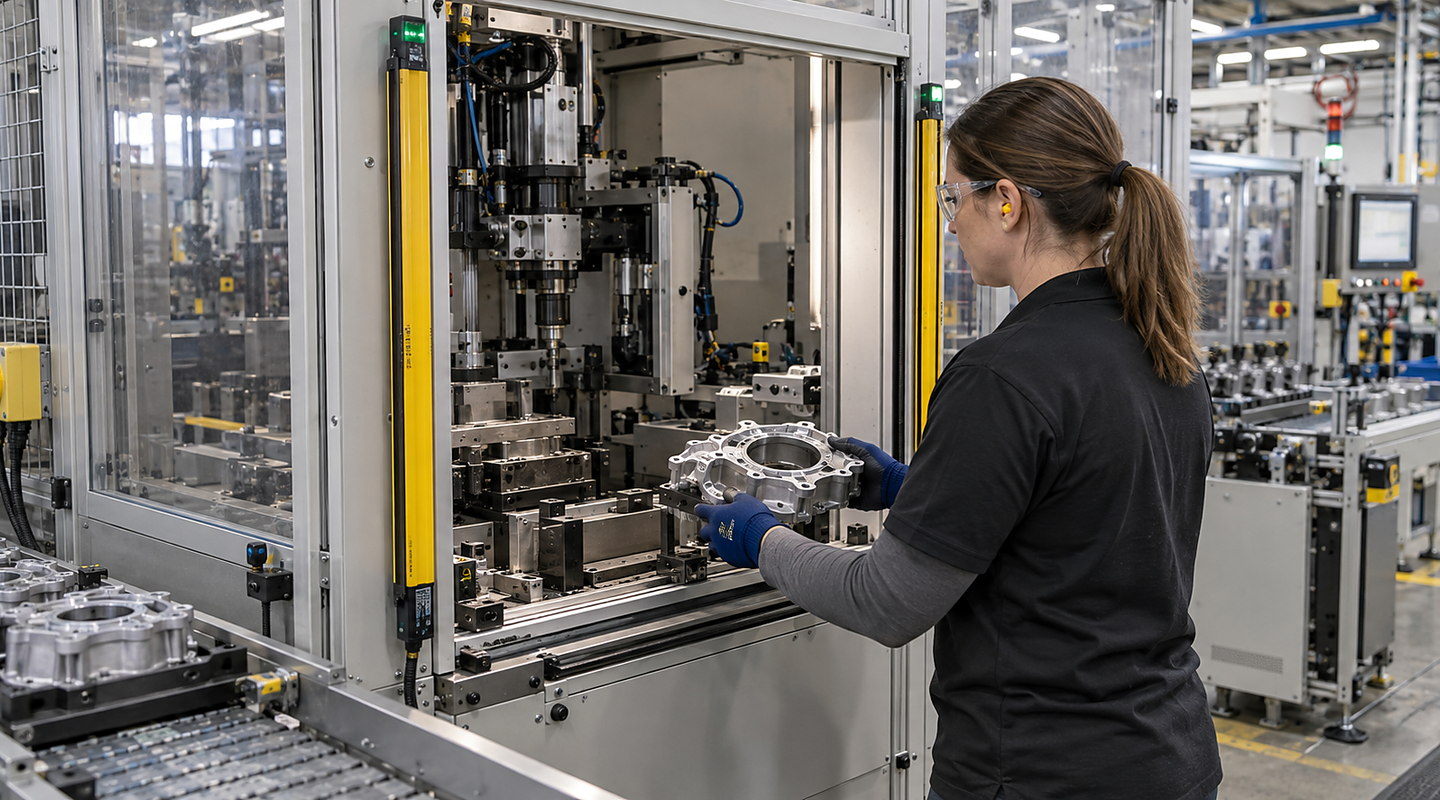
Agree pallet-muting validation evidence for the installed load range, access routes, protective and stopping functions, sequence, termination, abnormal states and controlled recovery. Retain configuration and test outcomes.
Validate the installed safeguarding arrangement against an agreed safety-function and material-transfer specification. Retain the device and control configuration, load range, expected and observed outcomes and unresolved actions. Include normal, interrupted and credible fault or access-related conditions using a competent, safely controlled validation method.
Use the hazard and foreseeable-access record with the comparison checklist. Do not expose people to danger to demonstrate a condition. Successful pallet passage alone does not establish that the complete safety functions meet their requirements.
Plan pallet muting systems around your machine hazards, operator tasks, access, stopping behaviour and validation evidence. Discuss a site-specific safeguarding concept with Oxford Machine Guarding. Use this guide to resolve risk-reduction and validation evidence before it limits the final system.
Discuss your application

Identify the installed machine, safeguarding concept, protective devices, control configuration and relevant stopping functions. Record the exact revision and agreed criteria before the validation activities.
Cover the approved pallet and load range, normal movement and credible interrupted, abnormal and fault states. Include the access conditions identified by the assessment, using the approved safe validation method.
Compare each expected safety-function and material-transfer outcome with the retained result. Record termination of muting, restoration of protection, fault response and recovery or restart decisions, with responsibility for resolving any discrepancy.
Map the pallet route and every foreseeable route towards the hazard, including spaces beside or behind the load. Include empty, damaged, offset or differing loads where credible. Identify what prevents a person accompanying the material through the transfer opening.
Identify the hazardous movements, protective devices and stopping functions involved. Obtain the relevant stopping and interface evidence for the complete machine. The responsible designer must assess protective positioning and required safety performance for the actual arrangement.
Separate automatic material transfer from operator entry, clearing a blockage, cleaning and maintenance. Record who performs each task and the approved access, isolation and recovery arrangements. Muting during material transfer is not permission for personnel access.
Record the protective device, muting inputs and control interfaces for the actual installation. Require a documented sequence defining permitted initiation, continuation, termination, fault response and reset or restart conditions. Do not assume an ordinary production signal establishes a safety function.
Record load and pallet dimensions, overhang, openings, adjacent guards and surrounding access. Include visibility at reset and recovery locations. Have the complete geometry and foreseeable access assessed; there is no universal sensor spacing or time setting in this guide.
Retain the approved safeguarding concept, configuration and revision, expected and observed validation results and unresolved actions. Include normal transfers and safely controlled abnormal or fault cases under the competent validation plan. Record what changes require reassessment.