Hazards and Foreseeable Access for Safeguarded Pallet-Transfer Muting: Hazard and access survey
Record hazards and foreseeable access at a pallet-transfer opening, including load variants, gaps beside or behind material, intervention tasks, stopping functions and the evidence needed for site-specific muting assessment.
In brief
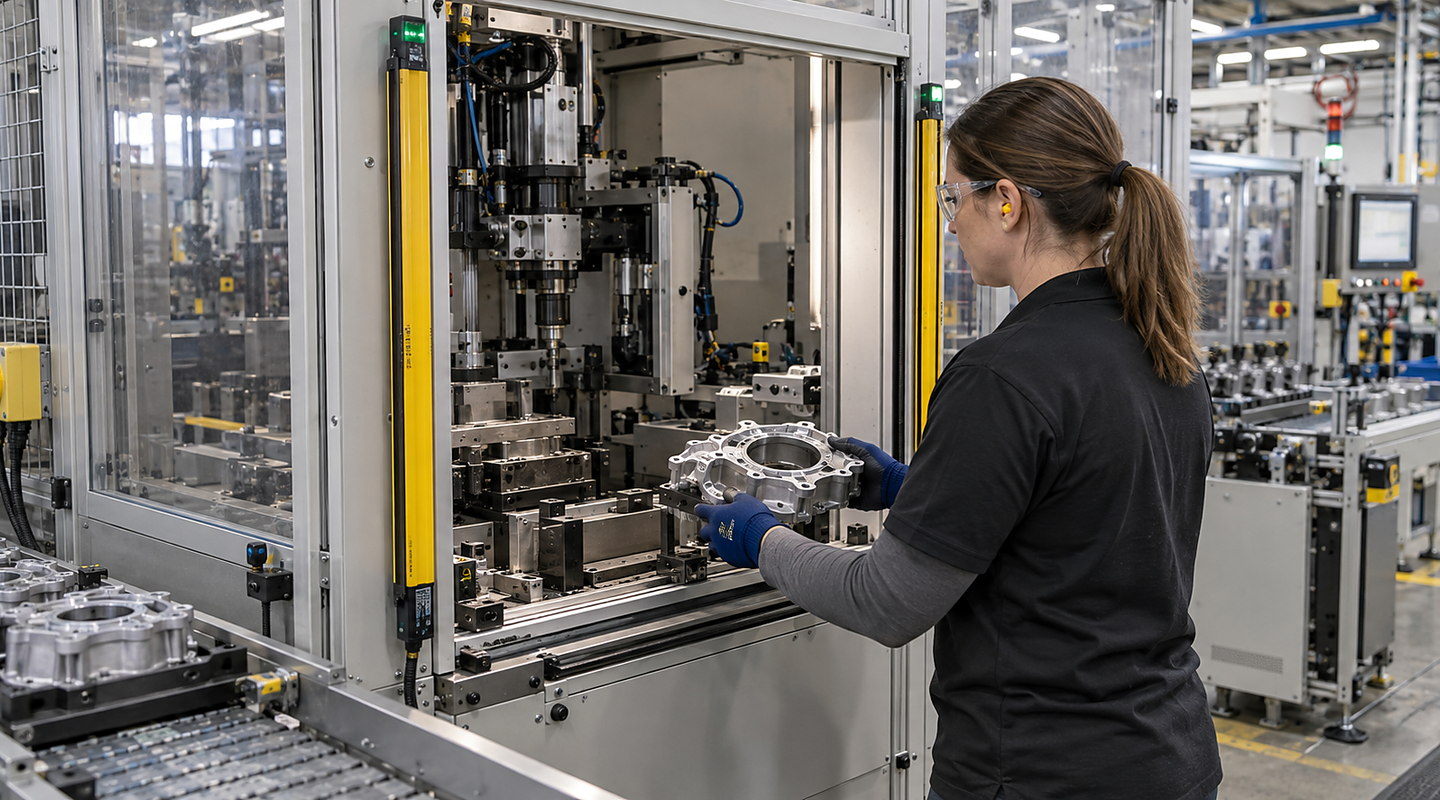
Describe the route used by the pallet and the routes a person could foreseeably use towards the hazard. Record the full load range, surrounding openings and access beside, behind or with the load. Link those observations to the relevant machine movements, protective functions and intervention tasks for competent assessment.
Use this access record with the transfer sequence review and validation plan. A nominal pallet size or a normal-cycle demonstration does not establish that foreseeable access is controlled.
On the production floor
Turn your production information into clearer decisions — Pallet Muting Systems
Plan pallet muting systems around your machine hazards, operator tasks, access, stopping behaviour and validation evidence. Discuss a site-specific safeguarding concept with Oxford Machine Guarding. Use this guide to resolve hazards and foreseeable access for safeguarded pallet-transfer muting before it limits the final system.
Hazards and Foreseeable Access for Safeguarded Pallet-Transfer Muting: condition, range and effect on your process
Current condition
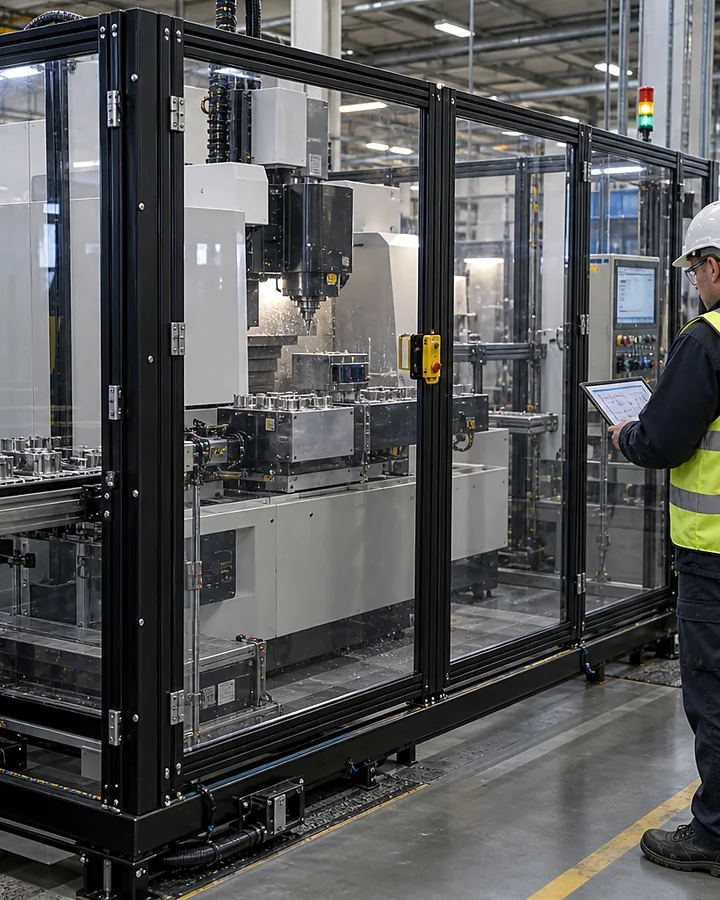
Record the actual transfer opening, hazardous movements, protective device and surrounding guards. Identify access from each side of the opening and the tasks that bring people near it. Keep observations, layout references and unknowns together.
Realistic range
Include the credible pallet and load dimensions, overhang, offsets, gaps, empty or damaged conditions and transfer interruptions. Review foreseeable access beside or behind the load and intervention, cleaning and maintenance tasks.
Effect on the system
Identify which observations affect material recognition, termination of muting, restored protection, stopping functions or recovery. Have the responsible designer determine the safeguards and validation required; a photograph or sensor catalogue is not a completed assessment.
Before you contact us
Five questions about hazards and foreseeable access for safeguarded pallet-transfer muting for your application
Who can confirm this information?Name the people responsible for the machine risk assessment, tasks, load information and safeguarding design. Record who can confirm each unresolved observation.
How representative is the sample?Use the actual opening, surrounding guards and representative load conditions. Include the credible variants and ordinary intervention tasks rather than only a nominal pallet.
What is the difficult condition?Identify gaps beside or behind a load, offset or damaged loads, interrupted movement and foreseeable misuse. Record the assessment needed rather than treating a normal transfer as proof.
How will you judge the result?Agree how the access observations link to safety functions and validation evidence. Keep the layout, load range, expected conditions and unresolved decisions traceable.
What else must be coordinated?Coordinate the machine owner, operators, safeguarding designer and control-system responsibilities. Personnel entry, cleaning, blockage recovery and maintenance need their own approved arrangements.
Connected details
Review hazards and foreseeable access for safeguarded pallet-transfer muting as part of the complete system
Question 1
Hazards and Foreseeable Access for Safeguarded Pallet-Transfer Muting
Map the pallet route and every foreseeable route towards the hazard, including spaces beside or behind the load. Include empty, damaged, offset or differing loads where credible. Identify what prevents a person accompanying the material through the transfer opening.
Question 2
Machine Motion and Stopping Behaviour
Identify the hazardous movements, protective devices and stopping functions involved. Obtain the relevant stopping and interface evidence for the complete machine. The responsible designer must assess protective positioning and required safety performance for the actual arrangement.
Question 3
Operating, Cleaning and Maintenance Tasks
Separate automatic material transfer from operator entry, clearing a blockage, cleaning and maintenance. Record who performs each task and the approved access, isolation and recovery arrangements. Muting during material transfer is not permission for personnel access.
Question 4
Existing Control-System Architecture
Record the protective device, muting inputs and control interfaces for the actual installation. Require a documented sequence defining permitted initiation, continuation, termination, fault response and reset or restart conditions. Do not assume an ordinary production signal establishes a safety function.
Question 5
Space, Visibility and Operator Ergonomics
Record load and pallet dimensions, overhang, openings, adjacent guards and surrounding access. Include visibility at reset and recovery locations. Have the complete geometry and foreseeable access assessed; there is no universal sensor spacing or time setting in this guide.
Question 6
Risk-Reduction and Validation Evidence
Retain the approved safeguarding concept, configuration and revision, expected and observed validation results and unresolved actions. Include normal transfers and safely controlled abnormal or fault cases under the competent validation plan. Record what changes require reassessment.